
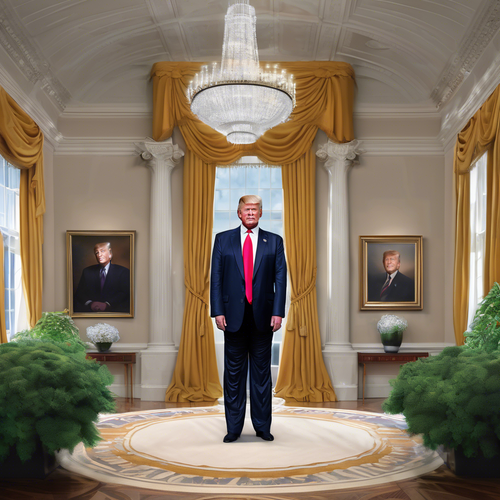
Trump’s Fresh White House Portrait Sparks Interest Amid Controversy Over National Portrait Gallery Leadership
As Donald Trump continues to dominate headlines for both his political maneuvers and public persona, his newly unveiled White House portrait has stirred a fresh wave of interest, bringing the National Portrait Gallery and its leadership controversies under the spotlight. The portrait, which depicts Trump in a vibrant setting, captures the essence of a leader who has both fervent supporters and passionate detractors 🎨.
The Portrait That Divides
Unveiled in a ceremony filled with applause, the new portrait is a testament to Trump’s complex legacy. The artwork, painted by renowned artist Lee J. Howard, features a striking composition that highlights Trump’s signature style: bold, unapologetic, and undeniably eye-catching. In a move reminiscent of both reverence and rebellion, the portrait’s unveiling has quickly become a flashpoint in an ongoing discourse about art, politics, and the role of public institutions.
Yet, this artistic representation has sparked its own controversies. Critics argue that the choice of subject matter only serves to deepen the cultural divides prevalent in American society. A recent poll indicated that only 39% of Americans view Trump’s presidency favorably, and a staggering 54% expressed that they prefer not to see his image displayed prominently in public spaces 🗳️.
The National Portrait Gallery in Crosshairs
Adding fuel to the fire is the backdrop of leadership challenges currently plaguing the National Portrait Gallery. The institution has faced scrutiny not only for its artistic choices but also for its administrative decisions. Key directors have come under fire amid accusations of bias and lack of transparency in curatorial practices. These challenges come at a time when public institutions grapple with the need to reflect a diverse population within their collections while navigating complex political landscapes.
“Art should serve as a mirror to society, yet it is essential that this mirror reflects the diversity and complexity of the American experience,” remarked Dr. Sara Fenton, a cultural historian specializing in public art. “The Portrait Gallery plays a crucial role in how we view our leaders, past and present.” 📚
The Cultural Significance of Presidential Portraits
The tradition of presidential portraits dates back to George Washington; these artworks have always served as more than mere representations of their subjects. They encapsulate the ethos of their times, acting as cultural artifacts meant to inspire, provoke, or sometimes ignite debate. Trump’s portrait is no exception, as it stands at the intersection of admiration and antagonism, reflecting how modern America continues to grapple with deeply polarized views on leadership and governance.
- Cultural Heritage: Portraits allow the public to connect emotionally with their leaders, forming a narrative of national identity and collective memory.
- Art as Activism: Contemporary portraits can likewise serve as forms of political protest or endorsement, challenging traditional notions of power within the art world.
- A Symbol of Our Times: Trump’s portrait may represent not just an individual but an entire chapter of American political history, stirring discourse long after his presidency has ended.
Public Reaction and Future Implications
The public’s response has been mixed, as social media threads burst with passionate debates. Supporters of the portrait hailed it as a rightful homage to a controversial figure, while detractors labeled it as distasteful and even out of touch with societal sentiments. The complexities of Trump’s legacy reflect broader trends in public opinion, suggesting an equally complex future for how art and legacy will interact 🎭.
“This portrait is more than an image; it’s a conversation starter about who we are as a nation and where we are headed,” stated social commentator Lisa Monroe, highlighting the need for ongoing discourse surrounding public art and state representations.
The Road Ahead for the National Portrait Gallery
In light of the intense scrutiny over the gallery’s direction, the leadership faces an uphill battle to regain public trust. Future exhibitions and curation will not only redefine how portraits reflect cultural understandings but will also play a critical role in building bridges across political divides. With art holding the power to provoke thought and inspire change, decisive action is crucial for the institution’s reputation and relevance in an increasingly diverse society. 🖼️
As the dust settles from the fallout surrounding Trump’s portrait unveiling, one thing remains certain: the dialogue about presidential portraits—and what they represent—will continue to evolve. Perhaps in the end, the real art lies not only in the painting but in the conversations it ignites, helping a nation navigate the often turbulent waters of its own history.