
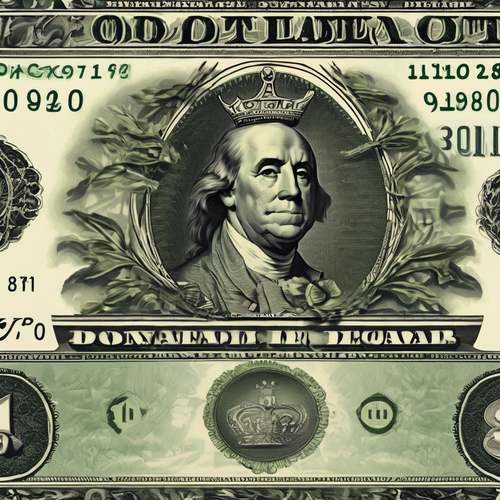
The Dollar’s Crown: A Rapid Decline
For decades, the US dollar has donned the crown as the world’s premier reserve currency, an emblem of economic strength and political influence. Yet, recent economic trends and geopolitical shifts have sparked a dramatic discussion: is the dollar’s reign coming to an end? 📉 The forces at play are shifting, and the consequences for global commerce could be monumental.
In 2022, data revealed that the dollar comprised approximately 59% of global reserves, a notable decline from 71% in 1999. As nations adapt to a rapidly changing economic landscape, alternatives to the dollar have gained traction, threatening its erstwhile dominance. An intricate web of factors has coalesced to create an atmosphere where the dollar’s supremacy appears increasingly tenuous.
Crucial Factors Fueling the Decline
Examining the landscape reveals several pivotal elements contributing to the dollar’s faltering status:
- Inflationary Pressures: The post-pandemic economy has seen rampant inflation, with rates reaching 9.1% in June 2022. This has not only weakened purchasing power at home but has also raised questions internationally about the stability of the dollar. 📈
- Emergence of Cryptocurrencies: Digital currencies, led by Bitcoin and Ethereum, have positioned themselves as alternative assets. Many investors and nations are now diversifying their portfolios beyond traditional fiat currencies, leaning towards decentralized options for security and value retention. 💰
- Geopolitical Tensions: Events such as the Russia-Ukraine conflict and the ongoing trade tensions with China have prompted nations to reconsider their reliance on the dollar. Strategic alliances are forming around alternative currencies, revealing a shift away from the dollar-centric international trade model.
- Shifts in Global Power: Emerging economies are gaining influence. The BRICS nations—Brazil, Russia, India, China, and South Africa—are exploring currency alternatives for trade, marking a call for a multipolar currency system. 🌍
The Ripple Effects on Global Trade
The ramifications of the dollar’s decline extend beyond US borders and into the fabric of global trade dynamics. With various stakeholders questioning the dollar’s reliability, international transactions are evolving:
“The dollar’s decline could lead to significant shifts in trade dynamics, pushing nations to innovate payment systems that better align with their economic interests,” notes Dr. Maria Gonzalez, an expert in international finance. 📊
Some key consequences include:
- Increased Currency Volatility: A diminished dollar could lead to greater fluctuations in currency values as countries adapt to new trade systems. Nations heavily reliant on the dollar may face uncertainty in pricing and financial planning.
- Trade Agreements in Alternative Currencies: Countries are increasingly negotiating trade deals in their domestic currencies or other alternatives, reducing transactional dependency on the dollar and potentially influencing inflation rates.
- Investment Reallocations: Investors are actively looking toward emerging markets and digital assets, prompting capital to flow in places once deemed less stable, thereby recalibrating risk assessments in the global economy.
The Future: A Recap on the Dollar’s Resilience
While the dollar’s decline is significant, history shows resilience. Past economic policies, such as the Federal Reserve’s interventions and strategic partnerships forged through diplomacy, have stabilized the dollar in turbulent times.
Insights for Investors and Policymakers:
- Diversification is Key: Investors should consider diversifying assets across multiple currencies and crypto to mitigate risks associated with a declining dollar.
- Policy Innovation: Policymakers must address inflation and engage in proactive diplomacy to fortify the dollar’s standing on the world stage.
Conclusion: Navigating Uncharted Waters
The dollar’s rapid decline calls for adaptation in strategies for government entities, businesses, and global investors alike. As the global economic environment continues to evolve, so must the approaches to currency management. The crown of the dollar may be slipping, but the story is not yet concluded. With vigilance and adaptability, its legacy can still be preserved in an increasingly interconnected world. 🌐